


Events
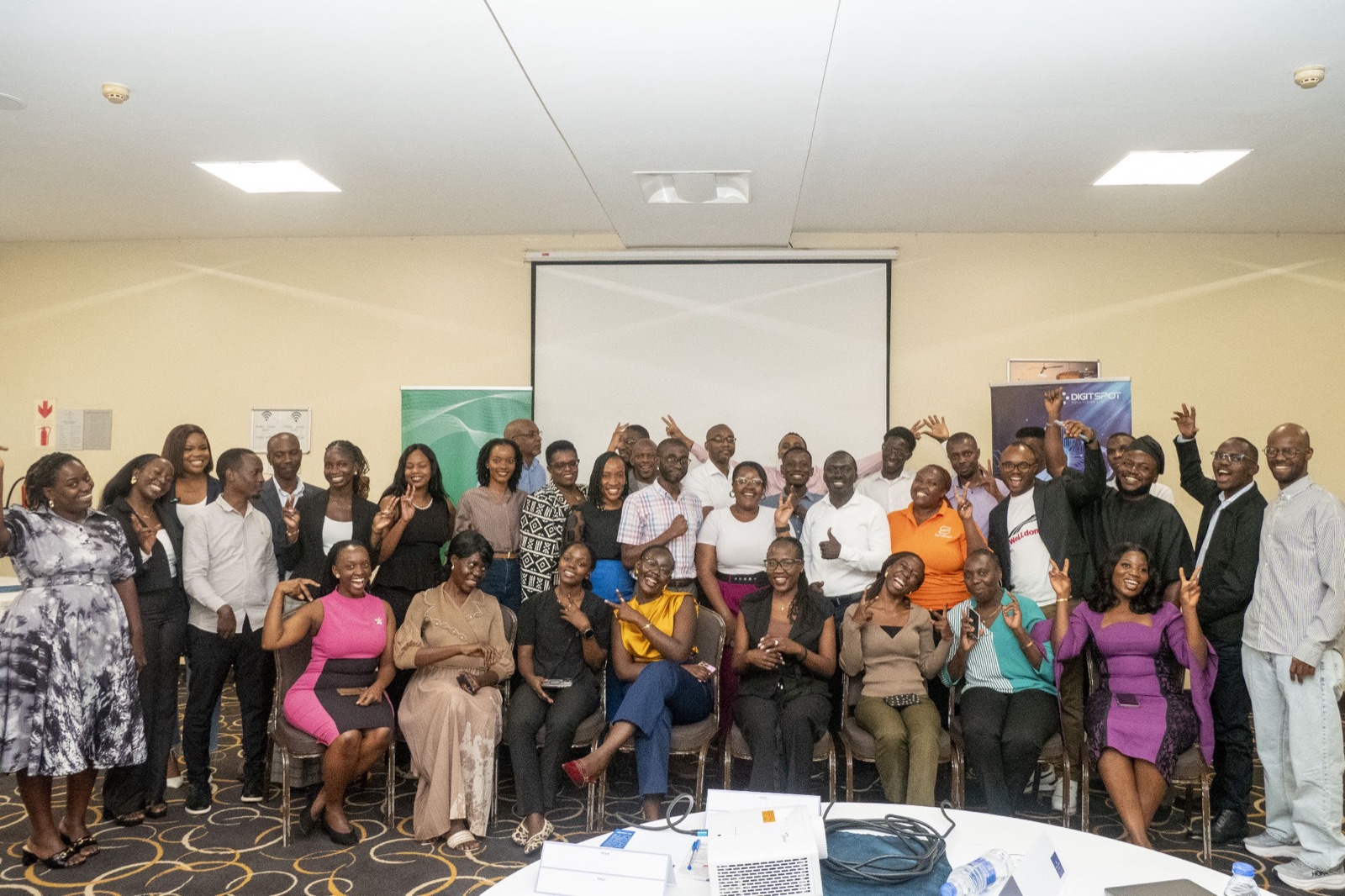
Digitspot Cloud Summit Uganda 2026: Accelerating AI Adoption and Cloud Modernisation in Kampala
September 11, 2026
4 min read

CBN circular PSS/DIR/PUB/CIR/001/004 requires payments transaction data generated in Nigeria to be stored and managed in Nigeria from 1 January 2027. This document explains how we read the requirement, what it means in practice for a bank running on AWS (or planning to), and the five-step method we use to get institutions compliant before the deadline without moving more than they need to.
Download the full approach paper (PDF, 8 pages): Digitspot approach to CBN payment-data localisation
This is our technical and operational reading, not legal advice. We ask every client to have counsel confirm the interpretation before final sign-off. Where the circular is silent, we say so rather than guess.
The data-localisation measure is two sentences long:
"All Financial Institutions and participants facilitating payments within Nigeria shall ensure that payments transaction data generated within Nigeria are stored and managed in Nigeria in accordance with data protection laws and regulations applicable in Nigeria."
"All affected Financial Institutions shall fully comply with this requirement effective January 1, 2027."
Everything else in the market is interpretation. This is ours, phrase by phrase.
| Phrase | What it means | What it implies for you |
|---|---|---|
| All Financial Institutions and participants facilitating payments within Nigeria | Scope is set by activity, not licence class or country of incorporation | Microfinance banks are named recipients. Your payment vendors are participants too |
| shall ensure | The duty is the institution's | Contracts with vendors help you prove it, they do not transfer it |
| payments transaction data | Not defined by CBN | Anything needed to reconstruct, dispute or audit a payment (section 3) |
| generated within Nigeria | Where the transaction originates | A transfer started by a customer in Nigeria is in scope even if one leg is abroad |
| stored | Every copy at rest | Replicas, backups, snapshots, DR copies, logs, exports and analytics copies, not just the primary database |
| and managed | Processing, administration and access | The application tier, the administrators and the people with login access must also be in Nigeria |
| in Nigeria | Physical location | The circular does not say who must own the facility (see section 4) |
| in accordance with data protection laws | The Nigeria Data Protection Act 2023 and the NDPC GAID 2025 apply on top | Any payment data that still leaves Nigeria is a cross-border transfer needing an NDPA basis |
| fully comply effective January 1, 2027 | Not "by", "effective" | You must already be compliant on that morning. There is no transition period |
CBN has not published a definition. The working test we use with clients:
If deleting the record would make it impossible to reconstruct, dispute or audit a payment, treat it as payments transaction data.
For a microfinance bank, that typically includes:
What is usually out of scope, and can stay where it is: HR and payroll, marketing and CRM without transaction content, the corporate website, internal wikis and email that carries no statements or transaction detail, source code and build pipelines, and monitoring metrics with no payment fields.
Clients are often told the circular requires things it does not. It is silent on:
The open question: does an AWS Local Zone count as "in Nigeria"? The plain text says yes: it is physical infrastructure in Lagos. CBN has not confirmed this in writing, and some local data-centre operators argue for a stricter "Nigerian-owned facility" reading. Our position is to build on the plain-text reading, document the physical location, keep encryption keys under the bank's control, and design so that the same work carries over to an AWS Outposts rack or a Nigerian colocation facility if CBN later takes the strict view. We will tell you plainly if that guidance changes.
| Question | Our answer |
|---|---|
| Can we stay in Ireland or the US and just encrypt everything? | No. The circular is about location, not confidentiality. An encrypted copy abroad is still stored abroad, and encrypted personal data is still personal data under the NDPA. |
| Can the application run abroad with the database in Lagos? | No. The service that reads and writes the data is managing it, and it holds payment data in memory, logs, traces and queues. It is also slower: every request would cross continents twice inside NIBSS timeouts. |
| Can we split the database and move only the financial tables? | Only by workload, never by table. A system that genuinely never touches payments can stay with its own database. Splitting one transactional database across countries creates cross-border joins and two-phase commits on a ledger. |
| Can backups or DR go to Cape Town or Europe? | No. Another region is another country. Backups and the DR site must be in Nigeria. On AWS this needs care, because some default backup mechanisms write to the parent region (section 7). |
| Our core banking system is provided by a vendor. Is that our problem? | Yes. Ask the vendor in writing where production, backups, DR and support access sit. If any are offshore, you need a migration plan from them or an alternative. |
| What about SaaS tools and APIs we call? | Each one is a data flow. A Nigerian-hosted service is fine. A foreign SMS, email, fraud, analytics or support tool that receives transaction details needs to be replaced, have the payment fields removed, or be documented with an NDPA transfer basis and an accepted risk. |
| Who is allowed to log in? | Every person and machine identity with access to payment data is part of "managed". Offshore administrators, group SOC tooling and vendor support access all need an answer. On AWS, the Nitro system and customer-managed encryption keys address provider operator access. |
| Is localisation enough? | No. CBN expects the institution to be able to access, protect and recover the data and continue operating when something fails. The NDPA, and CBN's cybersecurity framework, apply in parallel. |
Every engagement follows the same five steps. Only the answers differ from one institution to the next.
| Step | What we do | What you get |
|---|---|---|
| 1. Classify | List every system and mark it payment path, payment-adjacent (reports, analytics, notifications, support tools that carry payloads) or non-payment. Only the first two move. Dormant systems are deleted first | A signed-off system classification |
| 2. Map the copies | For every payment-path system, trace the primary store, replicas, backups, snapshots, logs, queues, exports, vendor calls and human access | A data map where every row has a Nigerian location, or a documented NDPA basis and an accepted risk |
| 3. Choose the landing zone | Match the workload to the right in-country option (section 7) | A target architecture and bill of materials |
| 4. Plug the leaks | Close the routes by which cloud services copy data back out of the country by default: snapshots, logs, load-balancer logs, object storage, managed queues | A design with no hidden offshore copies |
| 5. Build resilience in Nigeria | High availability inside the zone as the floor, a second in-country site as the target, with tested restores | Documented RPO and RTO, restore test results, and a resilience roadmap |
We resist both extremes: "move everything" is expensive and unnecessary, and "move only the database" is not compliant.
| Option | When it fits | What it offers | Lead time |
|---|---|---|---|
| AWS Local Zone, Lagos | Containers or virtual machines with self-managed databases. The fastest route for 1 January | EC2 compute (T3, C5, M5, R5, G4dn), EBS gp2 storage, ECS on EC2, EKS, Application Load Balancer, Direct Connect at Rack Centre Lagos, Elastic Disaster Recovery | Days. Nothing to order |
| AWS Outposts in a Lagos colocation facility | Workloads that need managed databases or object storage in country, or a second AWS site in Nigeria | Adds RDS on Outposts, S3 on Outposts and local EBS snapshots | Weeks to months, multi-year commitment, Tier III facility needed |
| Nigerian colocation or local cloud | Appliance or licensing constraints, a strict "Nigerian-owned facility" reading, or an independent second site | Whatever the provider offers; often used for the backup vault or DR copy | Varies by provider |
For most microfinance banks we recommend the Lagos Local Zone as the primary site for 1 January, with a second in-country site (Outposts or colocation) added in the first quarter of 2027.
| Not available in the Lagos zone | Our replacement |
|---|---|
| Amazon RDS (PostgreSQL, SQL Server, MySQL) | Self-managed database on EC2 with a standby on a separate host and automatic failover. SQL Server licence-included EC2 is available in the zone |
| AWS Fargate | ECS on EC2: same container images and task definitions, new capacity provider |
| Amazon S3 | An object store we run inside the zone, or S3 on Outposts |
| Amazon SQS and AWS Lambda | Worker containers on ECS with a queue in the zone (a database job table, RabbitMQ or Redis Streams) |
| Amazon ElastiCache | Redis on EC2 in the zone |
| NAT Gateway | NAT instance in the zone |
| Site-to-Site VPN | Software VPN on EC2, or Direct Connect at Rack Centre Lagos |
| Elastic Beanstalk, Amazon SES | Containerised services on ECS; a Nigerian mail provider, or notifications without transaction detail |
These are the defaults that copy data back to the parent region in Cape Town. Most local providers do not know about them.
Our Lagos reference architecture is written in Terraform and has been deployed and tested end to end in the Lagos Local Zone. For a typical microfinance bank it includes:
Sizing and run cost follow discovery. Removing the offshore estate, and the dormant systems we usually find, offsets part of the new spend.
As of mid-November 2026, about six weeks remain. That is tight but achievable for the payment path, because our landing zone is already built and proven. The order of work:
| Week | Work | Exit criterion |
|---|---|---|
| 1 | Discovery: system classification, data map, vendor hosting, access list | Signed-off inventory |
| 1 to 2 | Build the Lagos landing zone from our reference architecture | Non-production stack running in Lagos |
| 2 to 4 | Migrate non-production, test the payment path, prove a restore | Regression passed in Lagos |
| 4 to 5 | Replicate production data, rehearse and then perform the cutover in a low-traffic window | Production serving from Lagos |
| 6 | Remove payment data from offshore locations, assemble the evidence pack | Evidence pack ready |
| Q1 2027 | Second in-country site for resilience | Documented and tested DR inside Nigeria |
Anything that cannot be finished by 1 January (for example a vendor that cannot relocate in time) goes into a written remediation plan with dates and an interim control, so the bank can show CBN exactly where it stands.
Expect CBN to start compliance reviews in January. We hand over:
Localisation projects surface security issues that would fail a CBN examination on their own, and the migration is the cheapest time to fix them: databases and servers open to the internet, audit logging (CloudTrail) switched off, production payment services on interruptible capacity, unowned databases and stale backup exports in storage buckets. We fix these as part of the move.
To begin, we need:
We then send a discovery questionnaire and a first classification for you to correct, usually within two working days.
If you are a microfinance bank, fintech or payment operator working towards the 1 January 2027 deadline, contact our team for a discovery session. You can also download this approach as a PDF to share with your board, CTO or counsel.
Cloud & Compliance Practice
Digitspot Cloud Team is a Cloud & Compliance Practice at Digitspot with expertise in AWS cloud solutions and digital transformation strategies. With years of experience helping businesses leverage cloud technologies, they provide valuable insights and practical advice for organizations at any stage of their cloud journey.
Get the latest insights and updates delivered to your inbox.